

June 27, 2008PRINT

Phys-ed won't cut child obesity, study says

Pamela Fayerman, Vancouver Sun
Published: Thursday, June 26, 2008
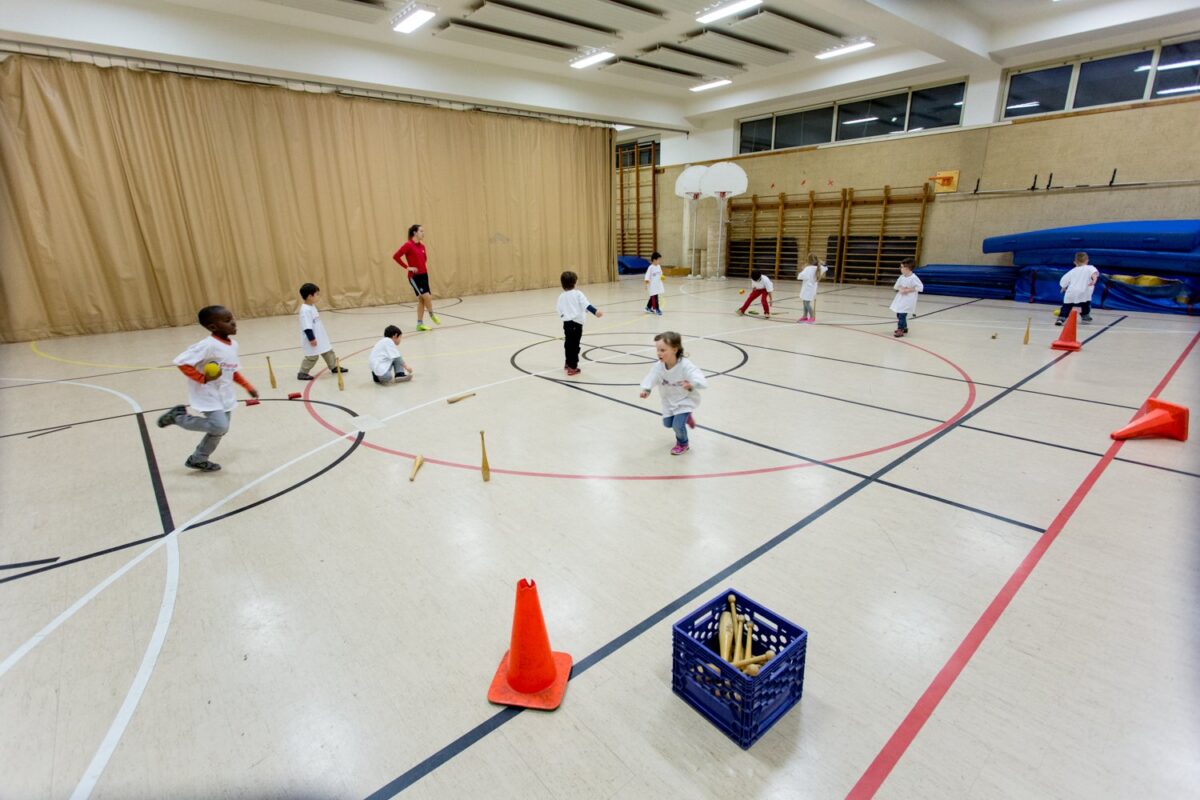
VICTORIA -- Pumping up the volume and frequency of physical education classes doesn't make a difference when it comes to childhood obesity, a B.C. study has found.

The research, presented to 700 delegates attending the Canadian Pediatric Society conference in Victoria, is likely to deflate the hopes of those who have been pleading for more school-based phys-ed classes as a panacea for obesity.

Dr. Kevin Harris, a pediatric resident at BC Children's Hospital, helped conduct an analysis of studies on school interventions to determine if they change body mass index (BMI), the common measure used to assess fat and weight.

While school-based activity interventions may be "theoretically appealing" and many jurisdictions, including B.C., are considering or enacting changes to increase physical activity inside and outside schools, the analysis shows that BMI doesn't change with more phys-ed.

Harris said researchers looked at 13 trials of six months to three years in which pre- and post-BMI measurements were taken. In studies involving nearly 10,000 children, primarily in elementary schools, none demonstrated a reduction in BMI with those who were assigned to the most phys-ed time, compared to those who didn't have as much.

Harris could not give precise details about the duration of the phys-ed classes, as the study is under embargo pending publication in a scientific journal.

"School-based physical activity interventions do not improve BMI, although they may have other beneficial health effects," he said.

"There are improvements to bone mineral density, aerobic capacity, reduced blood pressure and increased flexibility."

Childhood overweight and obesity rates have quadrupled in the past 40 years and now stand combined at about 30 per cent of all Canadian children.

Harris said experts have predicted that because of that, the current generation of children may be the first to have a reduced life expectancy because of the conditions associated with obesity, such as diabetes, arthritis and cardiovascular disease.

The desperation to fix the problem often focuses on finding ways to put more exercise into children's lives, but Harris said policy makers must realize that all the causes of childhood obesity are still not known.

So merely focusing on in-school phys-ed programs is not enough to reverse obesity trends.

"Phys-ed and physical activity are tremendously important, but this research shows phys-ed doesn't change BMI. So while the overall health benefits are established, phys-ed shouldn't be looked at as a central component of any obesity strategy," he said, adding that many researchers speculate that poor eating habits and other lifestyle factors are other causes that must be addressed.

"It is possible that interventions that focus on improving the diet of children may have more significant effect on body composition," he said, adding that recent research has shown that increased television viewing is a big culprit in the obesity epidemic because children eat junk food while watching

They also develop food preferences based on the advertising they see while watching, and often the ads are for high-calorie, sugary drinks and snacks.

In B.C., the provincial government has implemented new rules taking effect in September to ensure kids get at least 30 minutes of daily physical activity, but not necessarily in phys-ed class.

School officials can determine what type of exercise is acceptable and how they will keep track of each student's activities.


The definition of physical activity will be flexible and can include games at recess, in-class exercises, extracurricular activities, time spent walking to and from school and time spent in phys-ed classes.

As is the case in most places across Canada, phys-ed is mandatory in grades 1 to 10 in B.C., but optional in grades 11 and 12.

In Manitoba, phys-ed may become mandatory from kindergarten to Grade 12 by 2009, and in Newfoundland, students will be required to take it through Grade 11.


pfayerman@png.canwest.com

Send your feedback to angela@cahperd.ca

Hi Pamela,

Thanks for your article. I'm just responding to try to bring some clarity as to why PE isn't going to solve the obesity crisis. The perception of PE is drastically misunderstood.

The headline doesn't surprise me at all. PE classes are not designed or should not be designed to make kids fit nor solve the obesity crisis. Just as children taking Language Arts classes are looking to develop the skills to be able to read, write, analyze, comprehend, think critically, etc. about what they read and not to develop authors, novelists, journalists, etc., the same is true for PE. Students are supposed to be provided with the fundamental skills, knowledge and attitudes to become a healthy and active individual and understand how to take care of their bodies and be physically active.

In BC elementary teachers are generalist teachers and they all do not consistently receive nor have specialized training in physical education. However, they do receive extensive training, both in University and also within their school districts, in developing literacy skills with students. In addition, many school districts do not view Physical Education as a priority and it is marginalized. You can see that by how many district PE coordinators there are in the BC. (Surrey and Burnaby have the only full time coordinators where 15 years ago, there were 35). The DPA is an attempt to try to raise the profile and importance of health and activity. However, the link with PE and learning is not made by the Ministry, which is very disappointing.

Don't want to take up much of your time, but hopefully that helps. Thanks for the opportunity to respond.


Cheers,
Glenn Young,
Physical Education and Athletics Coordinator Curriculum and Instructional Services Centre 7532-134a Street, Surrey, BC V3W 7J1
Voice: 604-592-4224

"Lack of activity destroys the good condition of every human being, while movement and methodical physical exercise save it and p


More Stories

Archives of Stories


Physical and Health Education Canada

301-2197 Riverside Drive
Ottawa, Ontario Canada K1H 7X3

Tel. (613) 523-1348 or (800) 663-8708 (in Canada)
Fax. (613) 523-1206 General email: info@phecanada.ca

Copyright © PHE Canada, 2009

Privacy Policy